I have the land, now what?
The quickest way to make an empty field look like a farm is to put animals in it. That is also a fairly good way to give yourself several urgent problems at once.
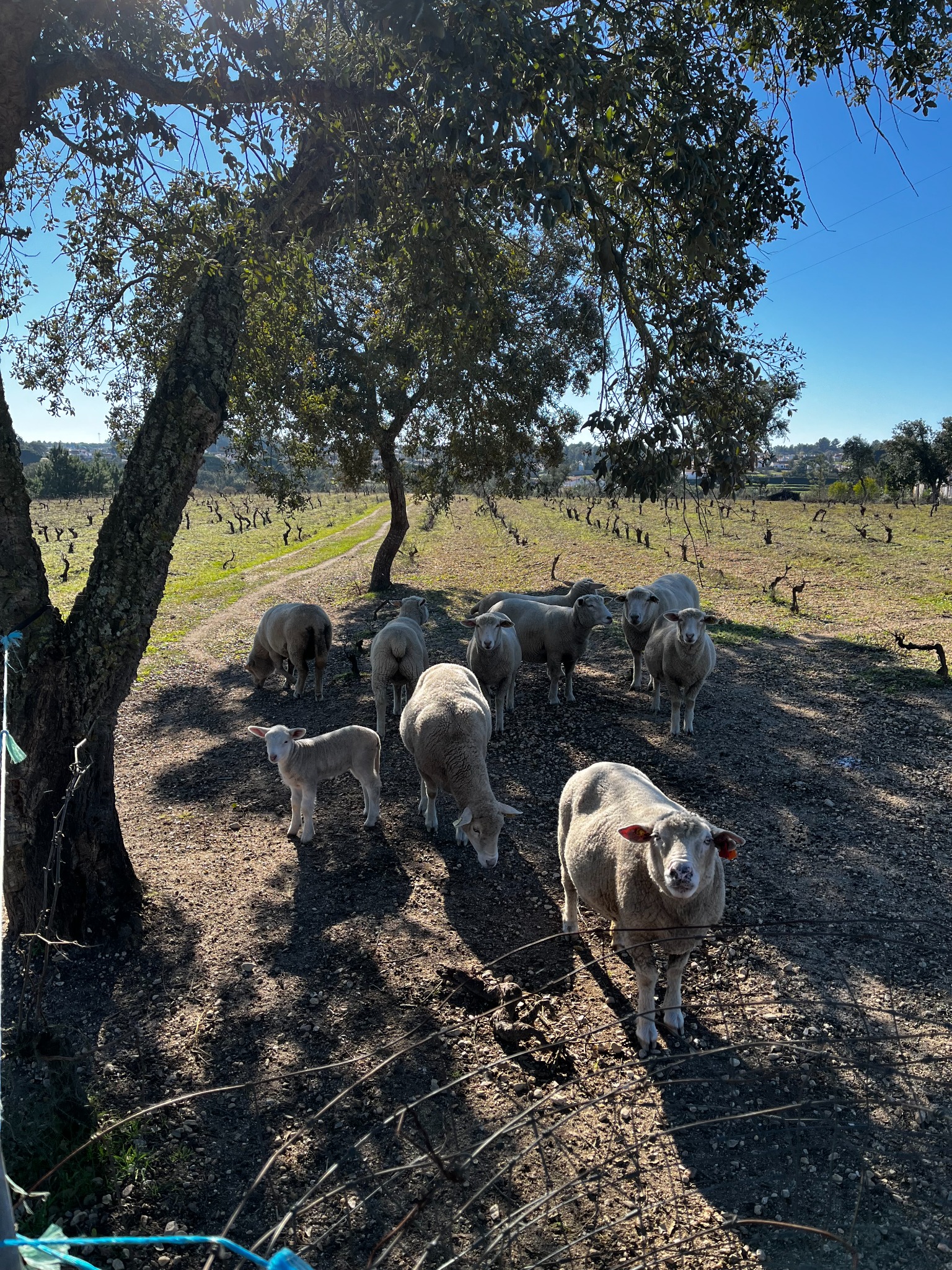
I understand the temptation. Sheep in the field, chickens scratching about, perhaps a few ducks by the water: now it looks like something is happening. I like animals. We have sheep here. But if I were starting from a bare piece of land, I would not make them my first job. A sheep does not care that the fencing is on next month’s list. It needs a sound enclosure, shelter, clean water and feed today. So do all the other animals, each in their own way. Getting them before those things are ready turns the first weeks into a scramble.
Before the animals, I would walk. Across the field, around the edges, through the places that look useless from the gate. Then I would do it again in the morning, late in the day, after rain, and when the wind is doing its best to make a nuisance of itself. One pleasant afternoon tells you very little about a piece of land. It may tell you where you would like to put a bench, which is a different question.
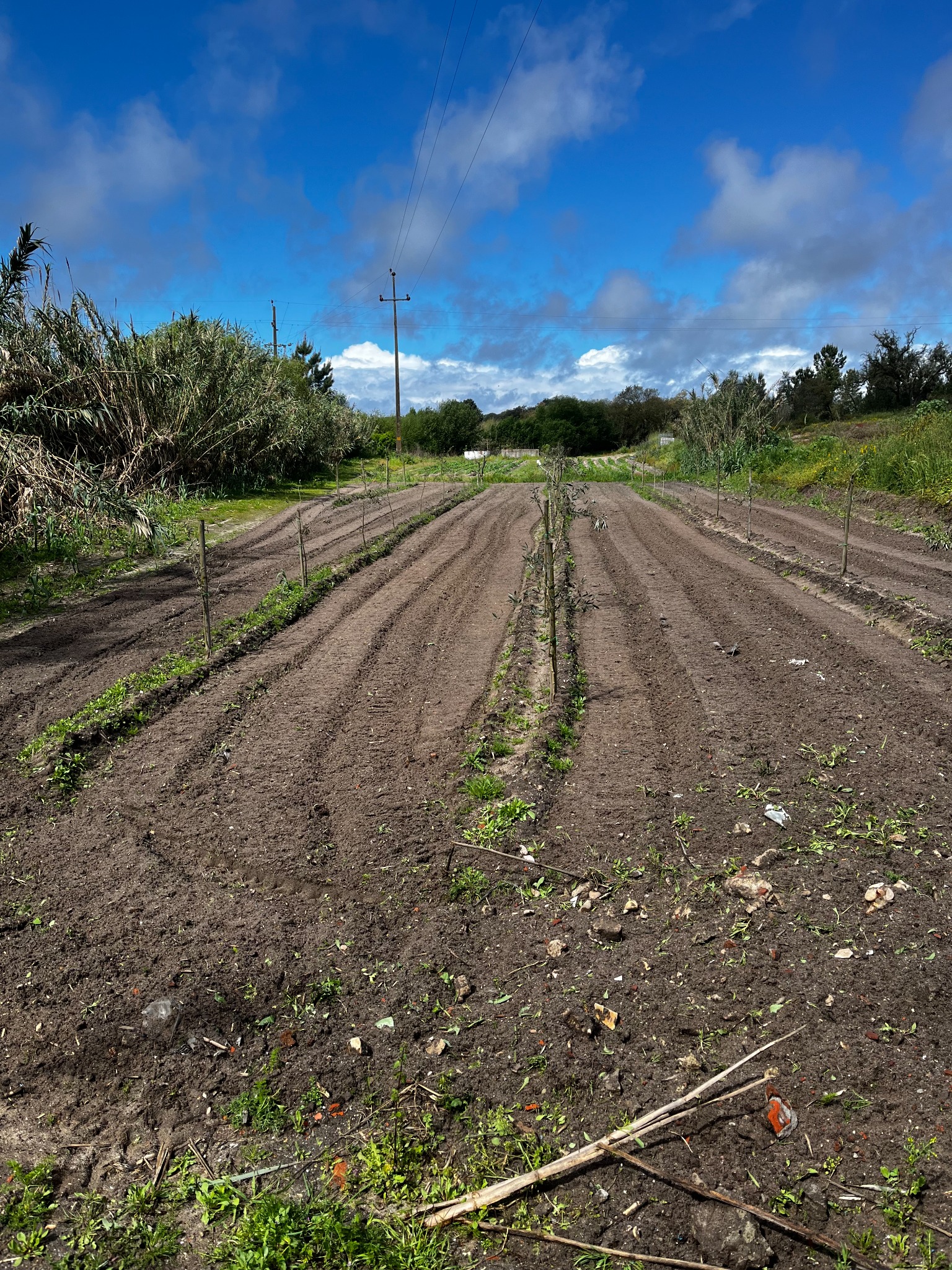
Pay attention to the small differences. Where is the sun all day, and where does the shade arrive early? After a proper rain, where does water sit, and where has the ground already dried out? Which corner escapes the wind? In winter, which low spot holds the frost after the rest has thawed? The answer can change over a short distance. A neat line on a plan will not persuade a cold, damp hollow to behave like a warm slope.
I would keep a rough map while making those rounds: a patch that stays wet, the line of afternoon shade, the way across the land I actually use. It does not have to be a beautiful drawing. It just has to remind me what I saw before I put a tree or a permanent fence in the wrong place. Some changes are inevitable; fewer surprises would be nice.
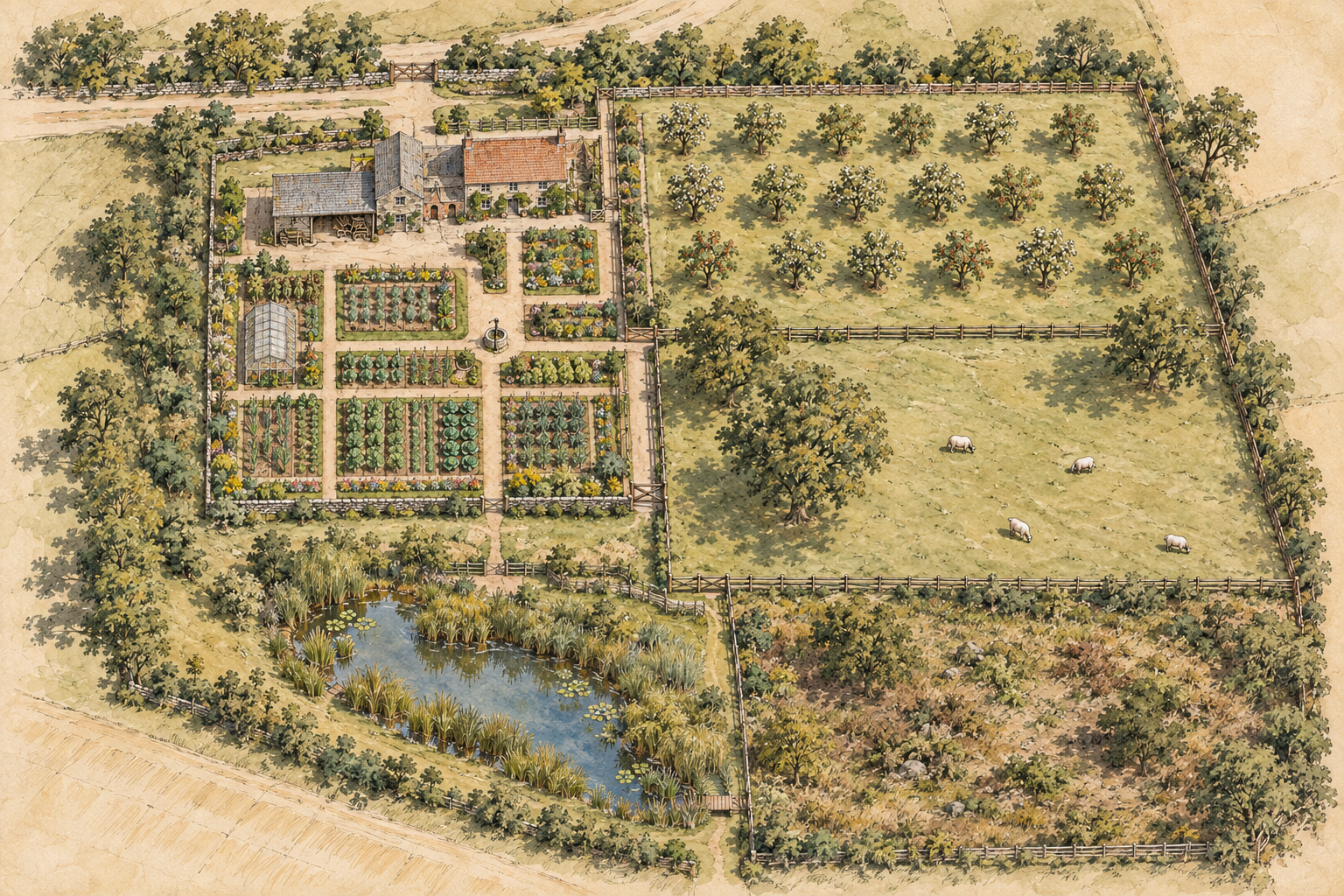
That is when a plan can start to make sense. The sunny, sheltered place may be worth keeping for something tender. The cooler, damper patch might suit a crop that resents the heat. An exposed edge can take a hardier planting, or simply remain open while you learn what it does. There is no prize for putting the vegetable beds exactly where they look best from the house if they are then cooked by summer sun or waterlogged all winter. Work with what each part of the ground is offering, rather than asking every part to do the same thing.
Then come the dull foundations. Find out how water will reach the places that need it, and whether that supply is dependable in August, not just in March. Make a dry place for tools and materials. Sort the first bit of ground you can actually work: clear it, see what the soil is like, improve it where necessary and start small enough to keep up with it. A modest bed that puts food on the table is a better first result than a field of plans. Paths and access matter too. Carrying everything by hand through mud has a way of changing one’s enthusiasm for a grand layout.
None of this is especially impressive in a photograph. A working water point, a decent fence, a patch of soil that is ready rather than merely cleared: they can look like very little at the end of a long day. They are still progress. Once those basics hold, you can add things without making every new idea depend on a frantic fix to the last one.
I am partway through this myself. There are parts of the land I know well and others I am still trying to read properly. Some plans will move when the next wet week, dry summer or cold morning tells me more. That is where the farm is at just now, and it is worth writing down as it happens.
← Back to The Farm