The bees have their own plans
Honey is the easy part to photograph. The rest needs doing.
A jar of honey makes beekeeping look like a fairly straightforward arrangement. Put bees in a box, leave them to it, collect honey. The photographs from our farm in central Portugal include the other side: frames being prepared, colonies being opened, wax recovered, and one frame that gave the bees considerably more freedom than intended.
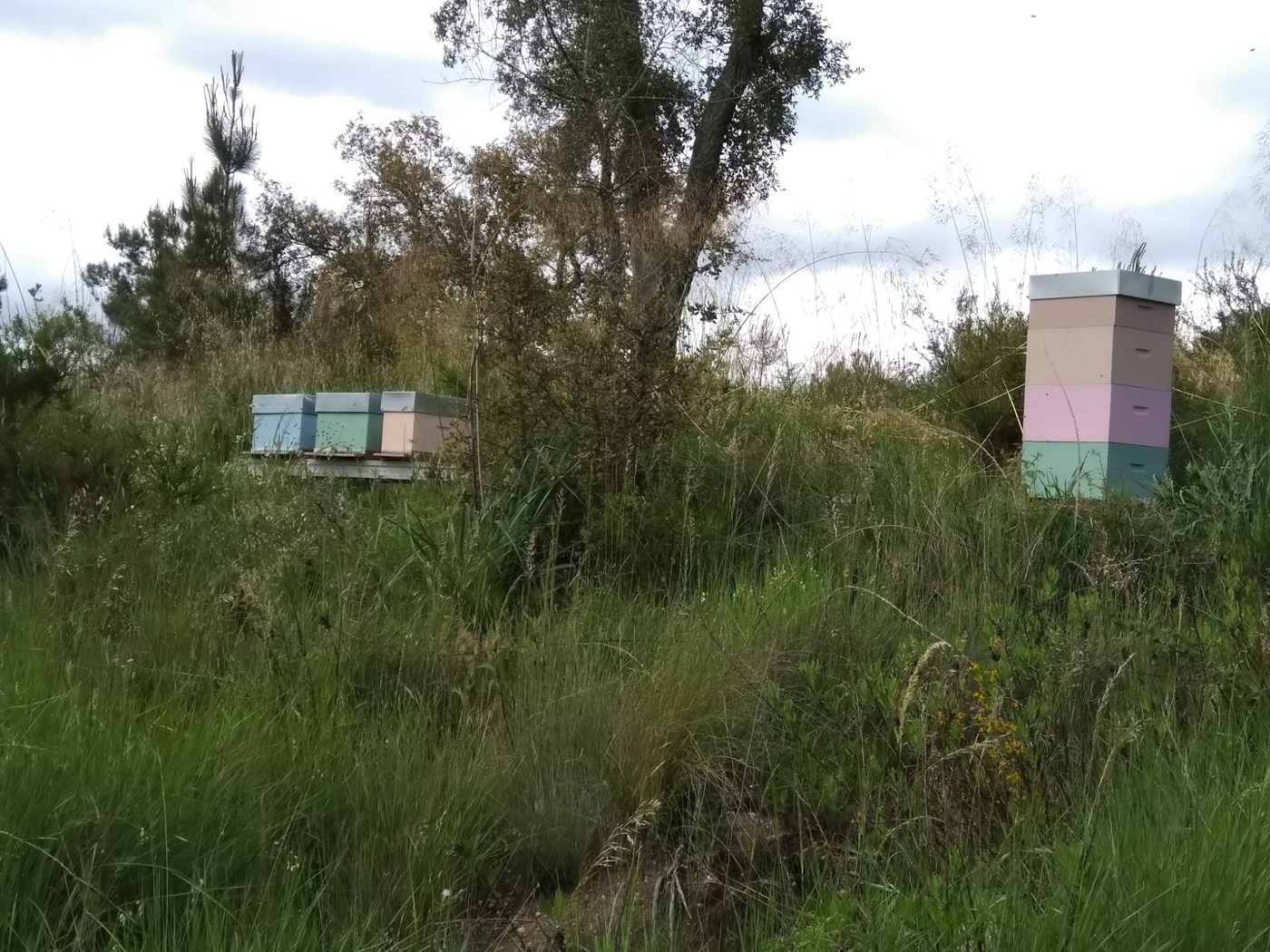
A busy entrance is only one clue
A good hive starts with a sound box, but what matters is the colony inside. Bees flying and bringing pollen are useful signs, not a health certificate. On a suitable warm, calm day, an inspection should look at the population, food stores and brood together. Eggs and young larvae suggest recent laying; pearly white larvae and a reasonably even area of capped worker brood are reassuring. The pattern needs reading against the season. A smaller autumn brood nest is not automatically a failing queen.
A persistently patchy pattern, abnormal larvae, sunken or perforated cappings, deformed wings or a sudden drop in numbers need investigation. None gives a complete diagnosis on its own. Varroa monitoring belongs in the routine before the colony looks sick, with treatment planned under Portugal’s current DGAV guidance and the product label. Brood, temperature and honey supers affect the choice and timing. The photographs here illustrate the work; they cannot establish that a colony is disease-free.
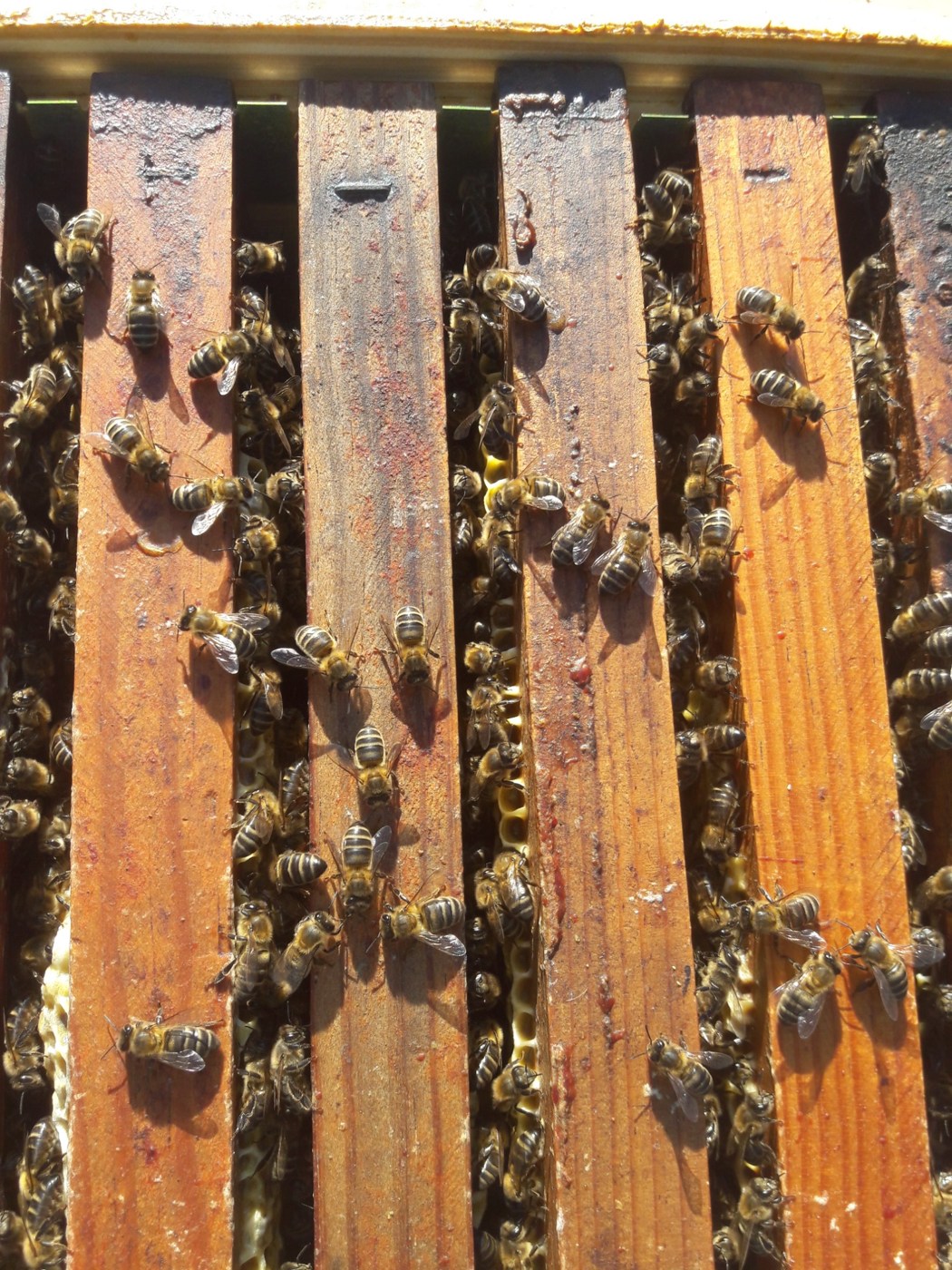
Wear proper protective clothing, move frames slowly, keep them over the box and avoid crushing bees. Have a purpose before opening it, rather than lifting every frame for curiosity. A smoker needs careful use and complete extinguishing afterwards; dry vegetation and fire restrictions still matter here. Stable stands, drainage, shelter from prevailing wind, reliable water and a roof that stays dry are basic husbandry, not optional improvements.
They repaired it. Not to my specification.
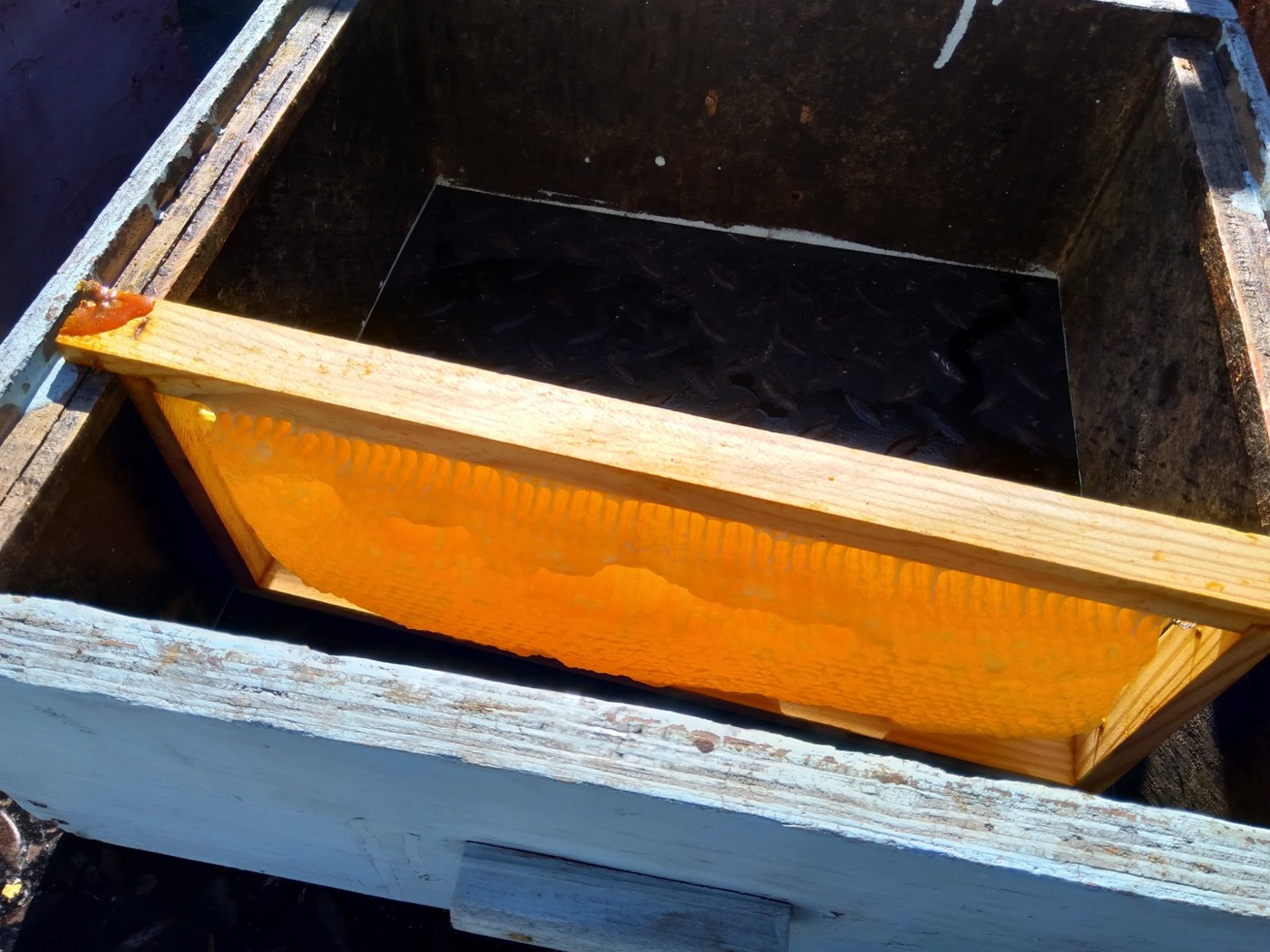
The damaged-looking frame in the photograph was a foundation failure. The wax sheet had not been properly secured into the frame groove. It fell, leaving a gap, and the bees started filling that space. The result was a mess inside the box. It was not simply a case of the weather melting a correctly fitted frame.
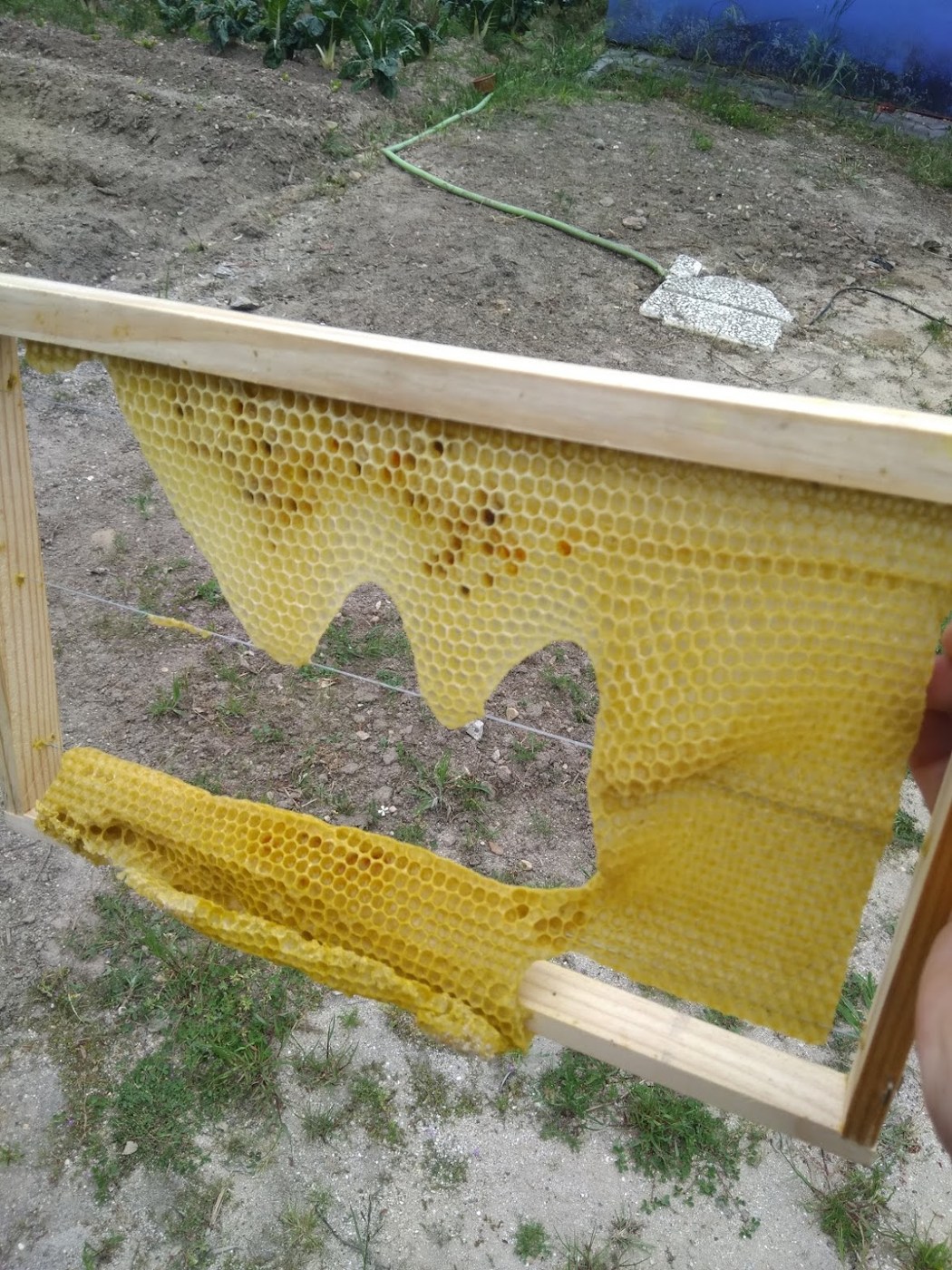
The lesson is to check the foundation fixing and any wire support before the frame goes in, then check new comb early enough to correct trouble. Once bees have built across the wrong space, separating frames becomes harder without damaging comb or brood. Correct frame spacing matters too. They will build in the space available; they have no particular interest in making my next inspection convenient.
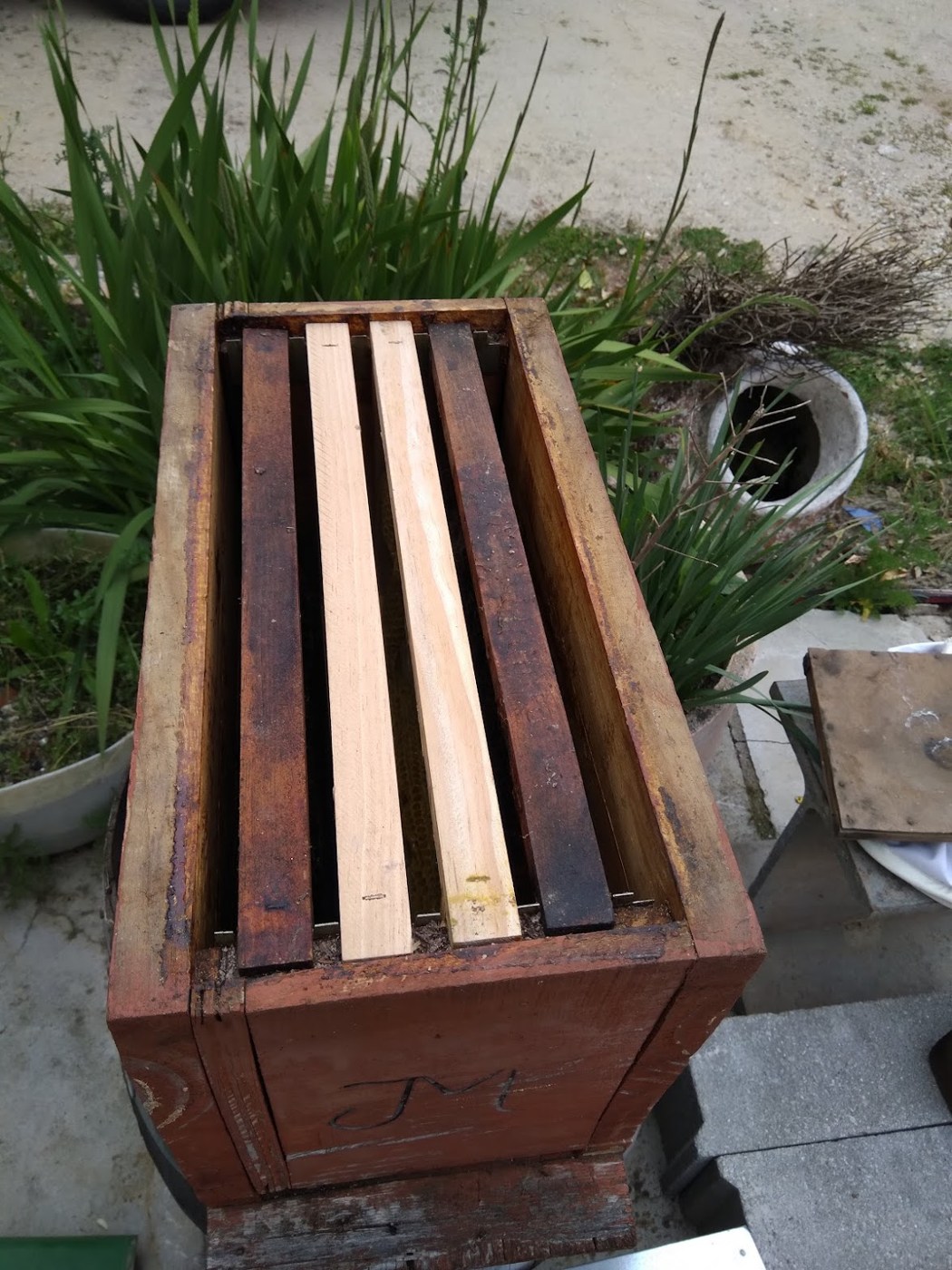
The darker box with four frames has a different job: catching swarms. It is a small receiving or bait box, not evidence that four frames are enough for every colony indefinitely. A caught swarm still needs its queen established, its health assessed, appropriate space and its stores checked. Unknown swarms and second-hand comb deserve particular care before joining the apiary. If access is unsafe, get experienced help rather than improvise with a ladder and a hopeful box.
Winter starts before the cold
Autumn preparation means assessing each colony’s stores and strength while inspections are still practical. Our winters are milder than northern Europe’s, but rain can stop foraging, and warm spells can keep bees using food. Flowers nearby do not guarantee usable nectar. There is no single winter ration that suits every hive size, colony and site. Record what is there, learn the weight of the box, and recheck stores through winter and into spring.
Where stores need topping up in suitable autumn weather, concentrated syrup made from white sugar and water can help. A common mixture is two parts sugar to one part water by weight, given in an internal feeder without spills that encourage robbing. Do not feed with supers intended for a honey harvest in place. In cold weather, when bees cannot reliably process syrup, suitable bee fondant placed immediately above the cluster is the more practical emergency feed. It needs to be reachable, not merely somewhere in the box. Avoid unknown-source honey, brown sugar and improvised additives.
Keep the roof sound, manage condensation without creating a draught through the cluster, and avoid long cold-weather inspections. Food will not fix a serious mite burden, a queen problem or a colony too weak for the space it occupies. The first-rain note puts the hives alongside the other autumn jobs; this part has its own timetable.
The harvest is the surplus
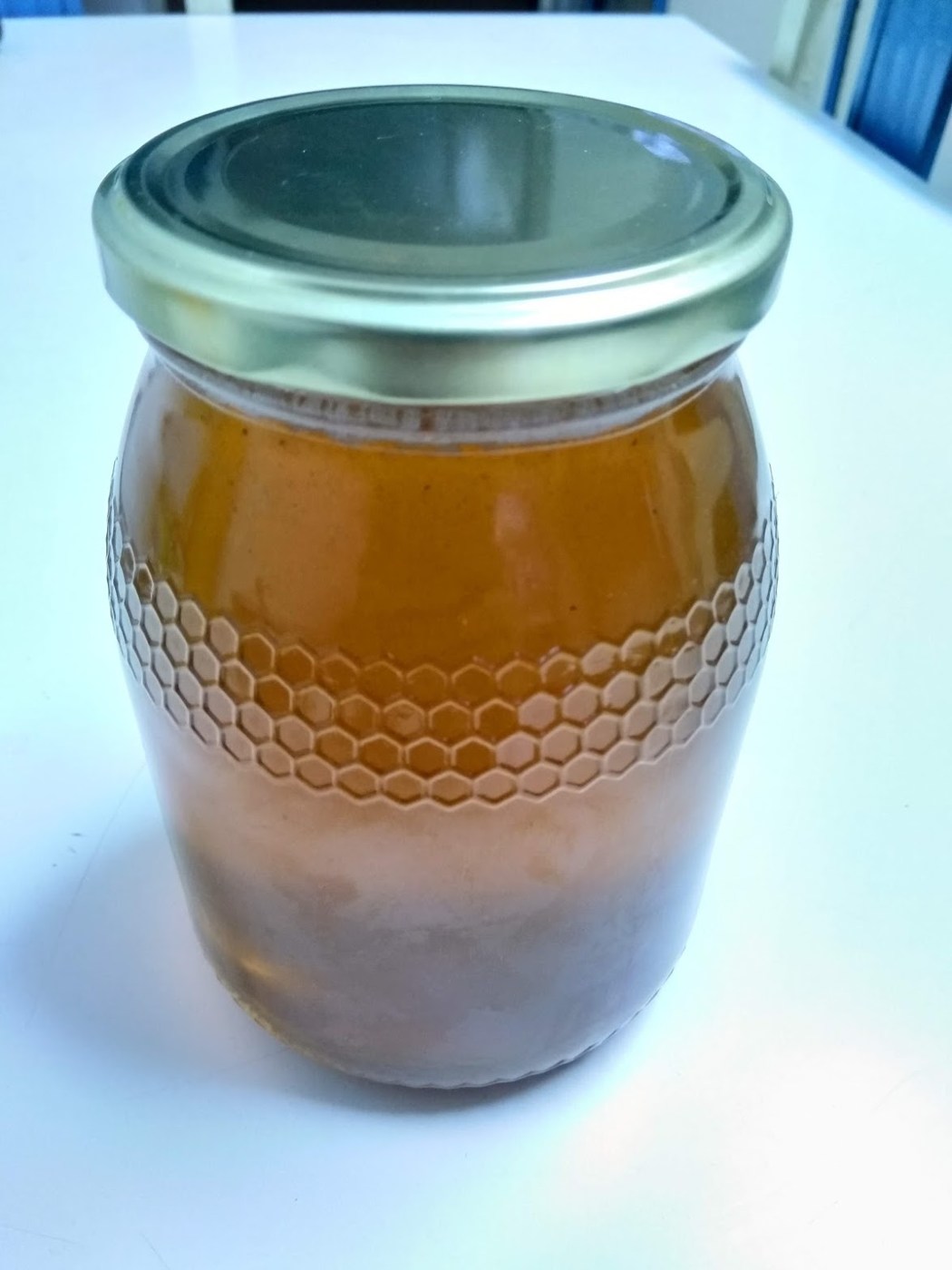
Honey comes off when it is ripe and the colony can afford it, not because I have empty jars. Leave adequate stores and take honey frames without brood. Cappings are a useful clue to ripeness, but a calibrated honey refractometer checks moisture before extraction and bottling. Wet honey can ferment. Also check any treatment restrictions before harvesting; feeding syrup and harvesting saleable honey are separate operations.
Uncap into a clean tray, extract with food-safe equipment, strain out wax fragments and let the honey settle covered before putting it into clean, dry jars. Keep water out and lids on: honey takes up moisture from the air. Label the batch and date, then store it somewhere dry away from heat and sunlight. Save the cappings separately. They are useful wax, not a bin full of sticky waste.
Keep the wax as well
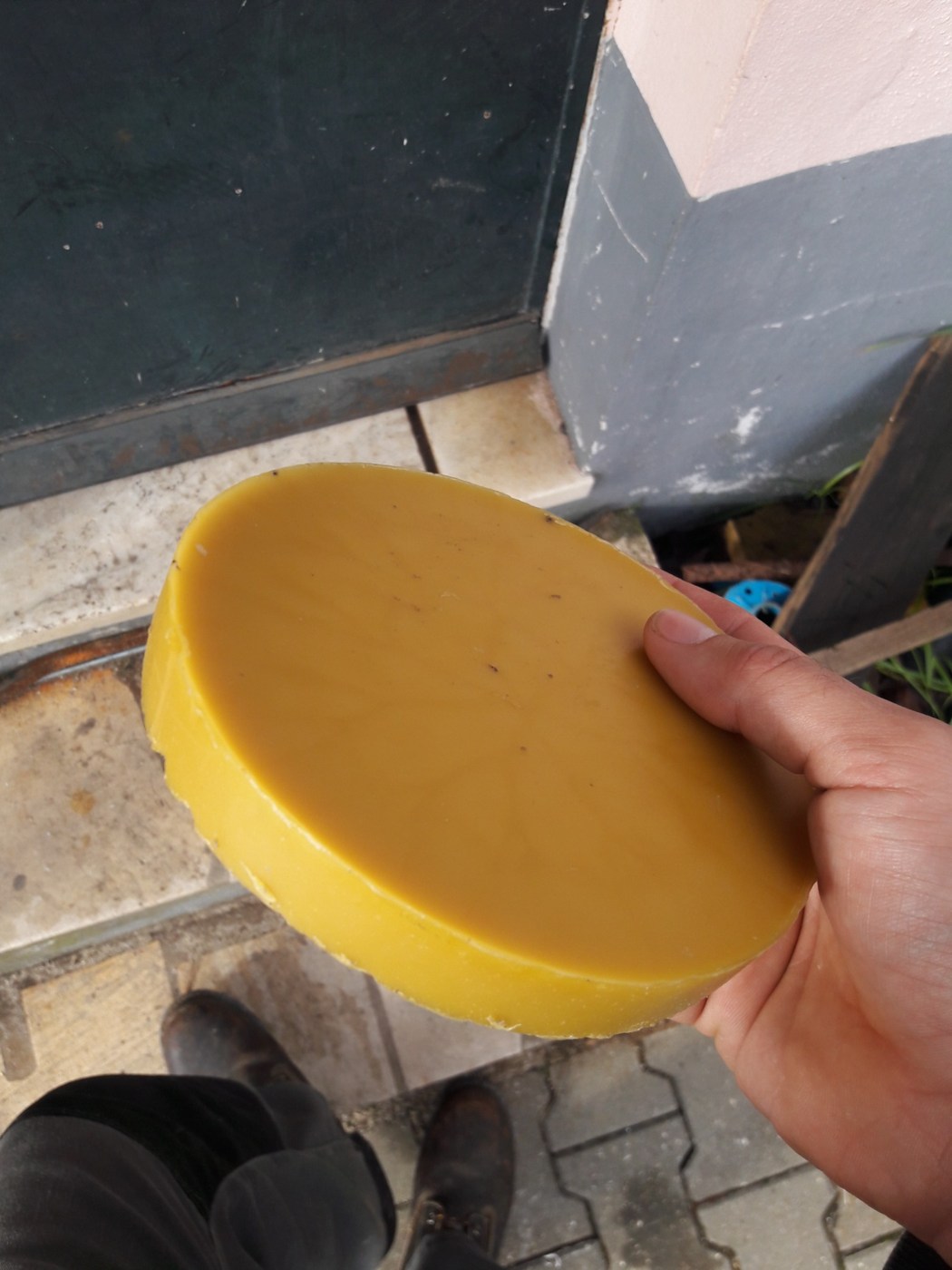
Drain the honey from clean cappings first. For small batches, use dedicated heat-safe equipment and gentle indirect heat in a water bath, then strain the melted wax through a heat-safe filter and let it cool into a mould. If processed with water, the wax sets above it; lift the cooled cake and scrape away residue underneath. Remelt gently if it needs another cleaning.
Never heat wax directly over a flame, let it boil or leave it unattended. Protect hands and eyes, and keep children clear of hot wax and vessels. Separate clean cappings from old brood comb; ordinary rendering is not sterilisation and does not make suspect wax safe for reuse in a hive. Recovered wax can be kept for candles or other suitable uses once its quality is known. Getting wax back into foundation is a separate, careful process.
That is the arrangement I want: bees with enough food and sound housing, honey taken as surplus, wax kept useful, and mistakes written down before I repeat them. The jar looks tidy. Getting there is less tidy, as the frame photograph makes quite clear.
Further reading
DGAV: Portugal’s Varroa control plan, May 2026; EU CAP Network: feeding during shortages; Penn State Extension: recognising pests and diseases; Extension: checking honey moisture; FAO: beeswax processing. Use local advice for timing; these notes are not a diagnosis or treatment prescription.
Back to The Farm