The hedge has a harvest too
Not everything worth harvesting was planted in a row.
There is plenty to do on the farm without finding another job in a hedge. Still, autumn has a way of putting fruit beside the path. Some of it is ready, some needs longer, and some should stay exactly where it is. The useful part is learning the difference before arriving with a bucket.
In central Portugal, late September is not a clean change of seasons. The ground can still be dry, the afternoons warm, and the first rain more of a suggestion than a settled arrangement. Fruit follows the weather and the patch it grows in. A sunny boundary can be finished while a sheltered corner still has something worth picking. The calendar gets you outside. It does not fill the basket.
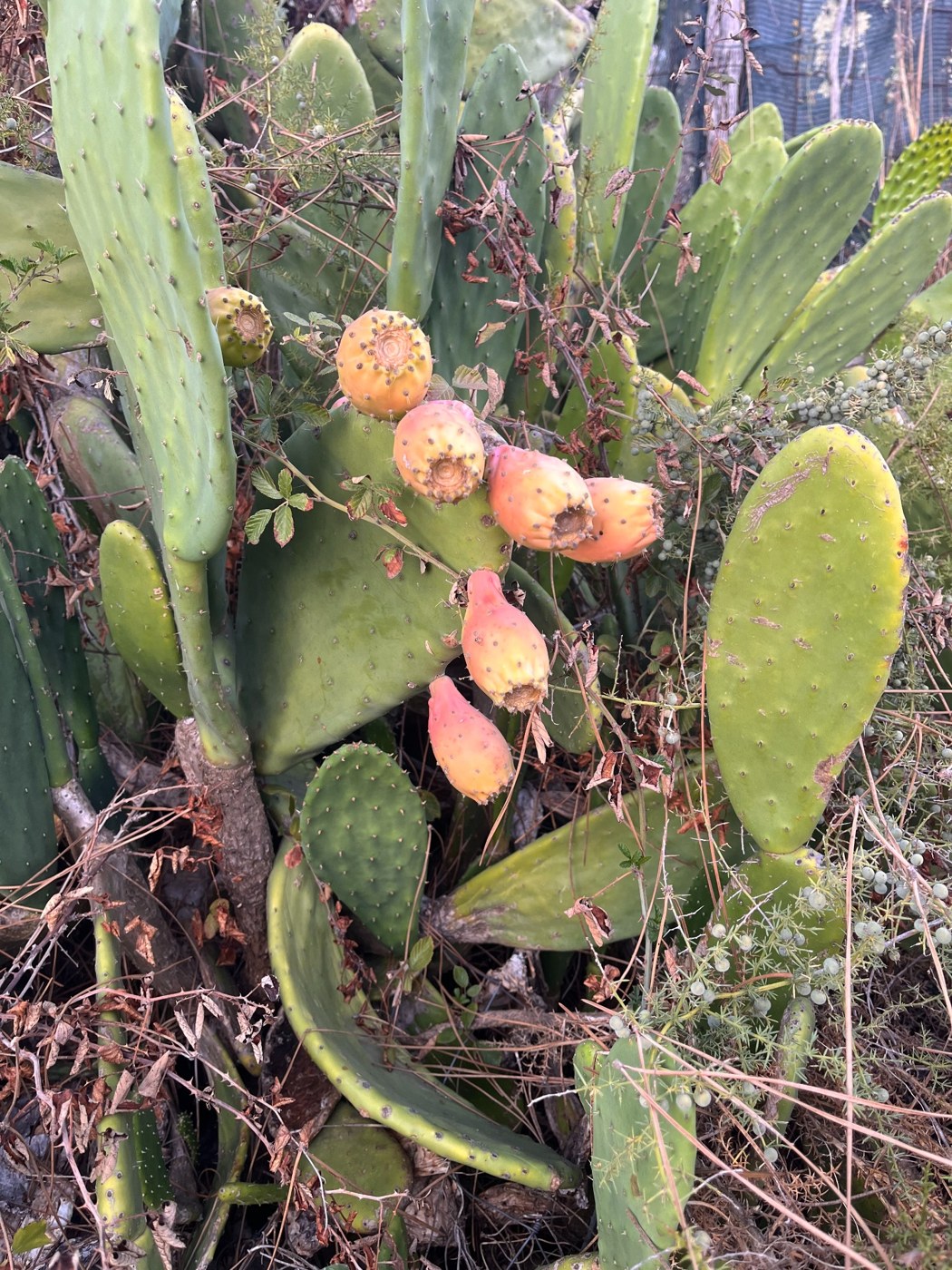
The prickly pears are hard to miss. They are also quite capable of making a small harvest unnecessarily unpleasant. The tiny hair-like barbs, the glochids, are the problem as much as the obvious spines. Use tongs to pick them, keep them in a separate container, and follow a proper method for removing the glochids before handling and peeling. A quick wipe on a shirt is not that method. Fruit colour varies between varieties, so red alone is not a universal test of ripeness. Pick ripe fruit; it will not finish ripening afterwards.
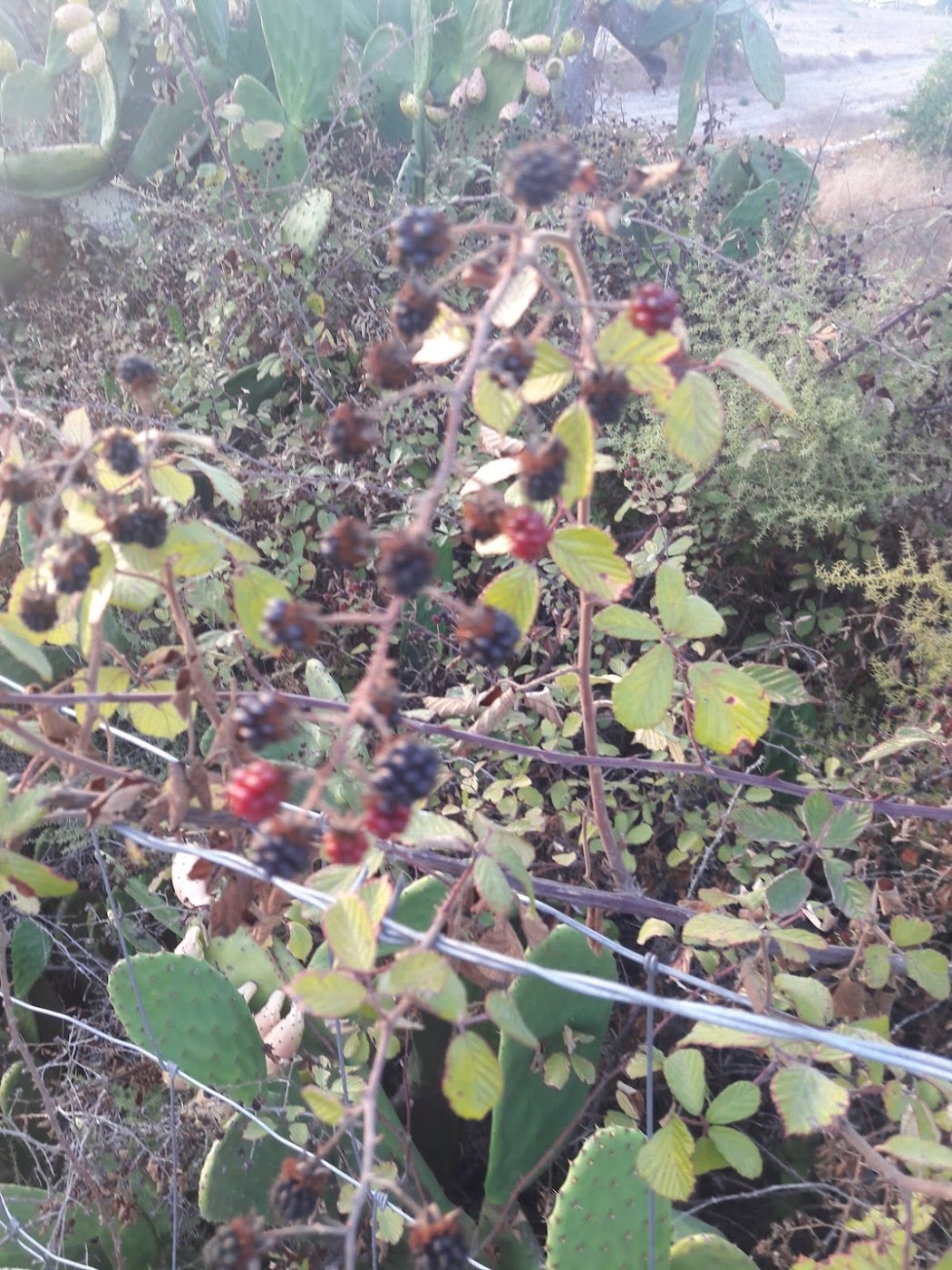
Blackberries are a different sort of job: slow picking, usually with something catching a sleeve. By early autumn, many exposed brambles here may already be past their best. I would look for sound, ripe berries in the cooler corners rather than expect every bush to provide. Leave the mouldy, dried or damaged fruit. A handful worth eating is more useful than a tub collected because I had brought a large tub.
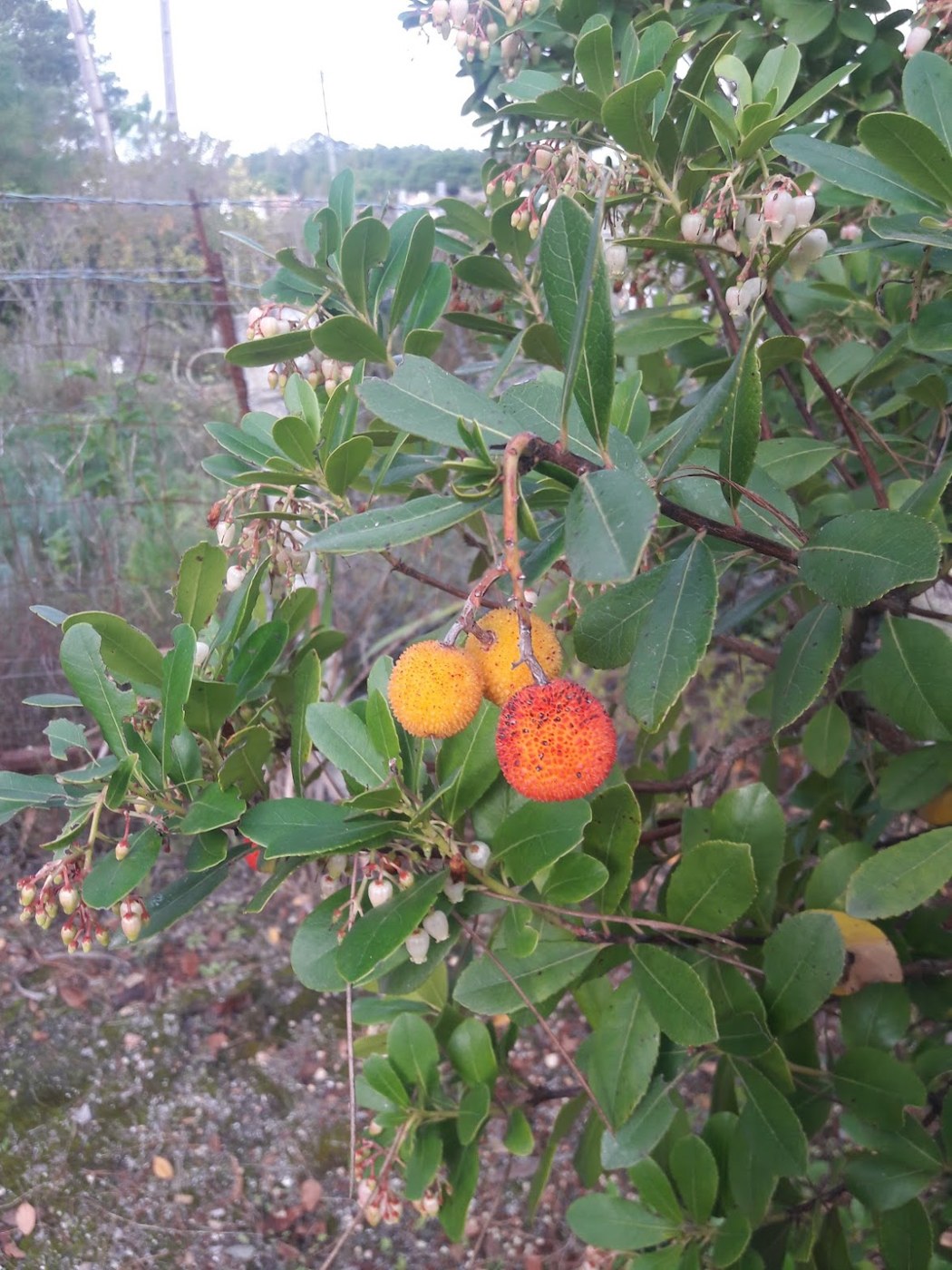
Then there are the medronhos, the fruit of the strawberry tree. Despite the name, this is not the garden strawberry growing close to the ground. Medronhos ripen through autumn into early winter, and the tree can carry flowers alongside fruit from the previous year's flowering. Orange fruit still has waiting to do; fully ripe fruit is red and soft. This is a harvest to revisit, rather than strip in one go. The familiar aguardente is one destination, but it is not a reason to collect every fruit on the tree.
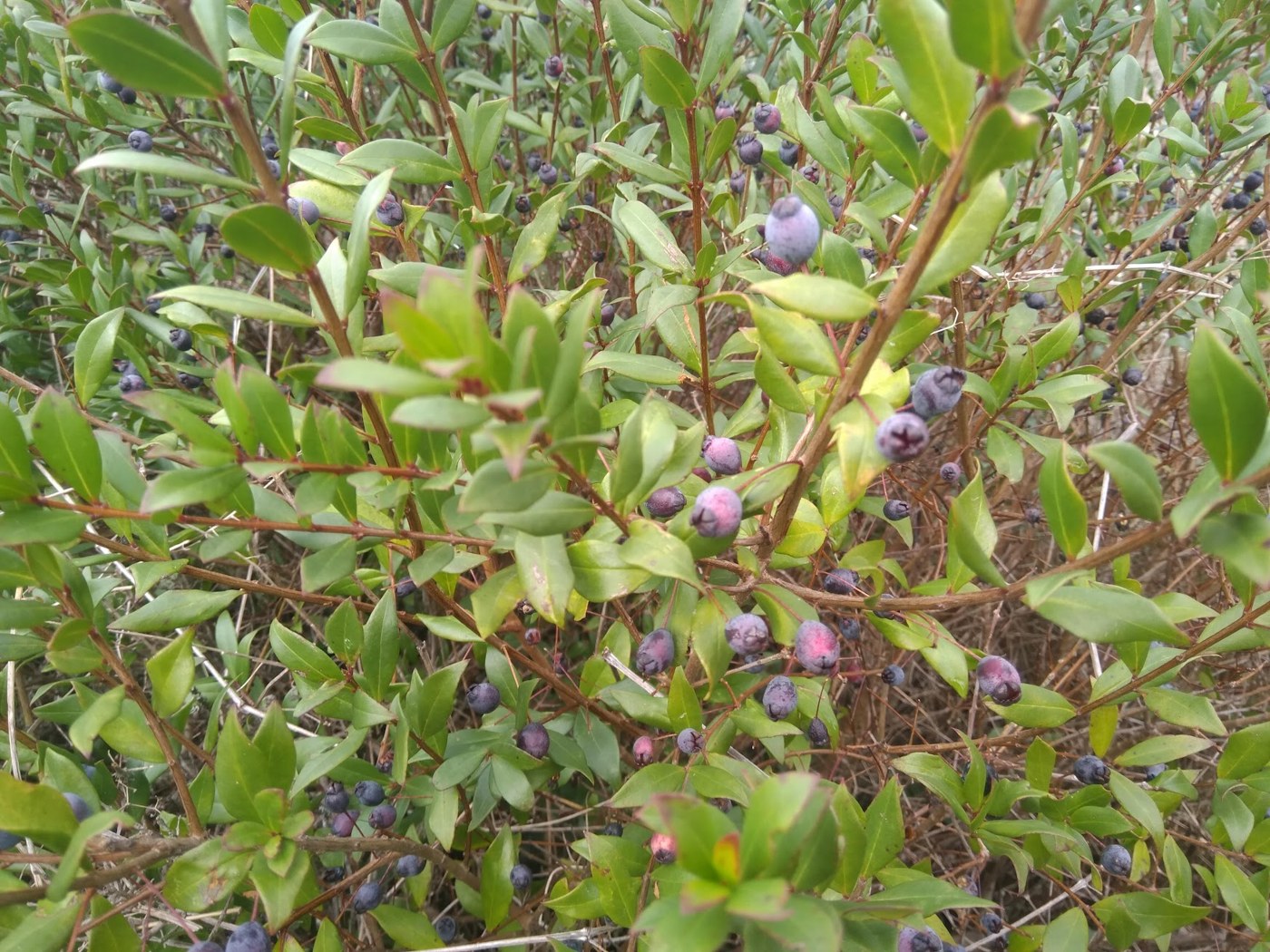
The blue berries in the photographs need a more careful caption. They resemble murta, or myrtle, another shrub whose berries mature in autumn. Resemblance is a starting point for checking, not permission to eat them. Leaves, their arrangement, flowers and the whole plant matter. I would confirm the plant with someone who knows it locally before deciding what to collect. A berry photograph is not an identification guide, and blue does not mean blueberry.
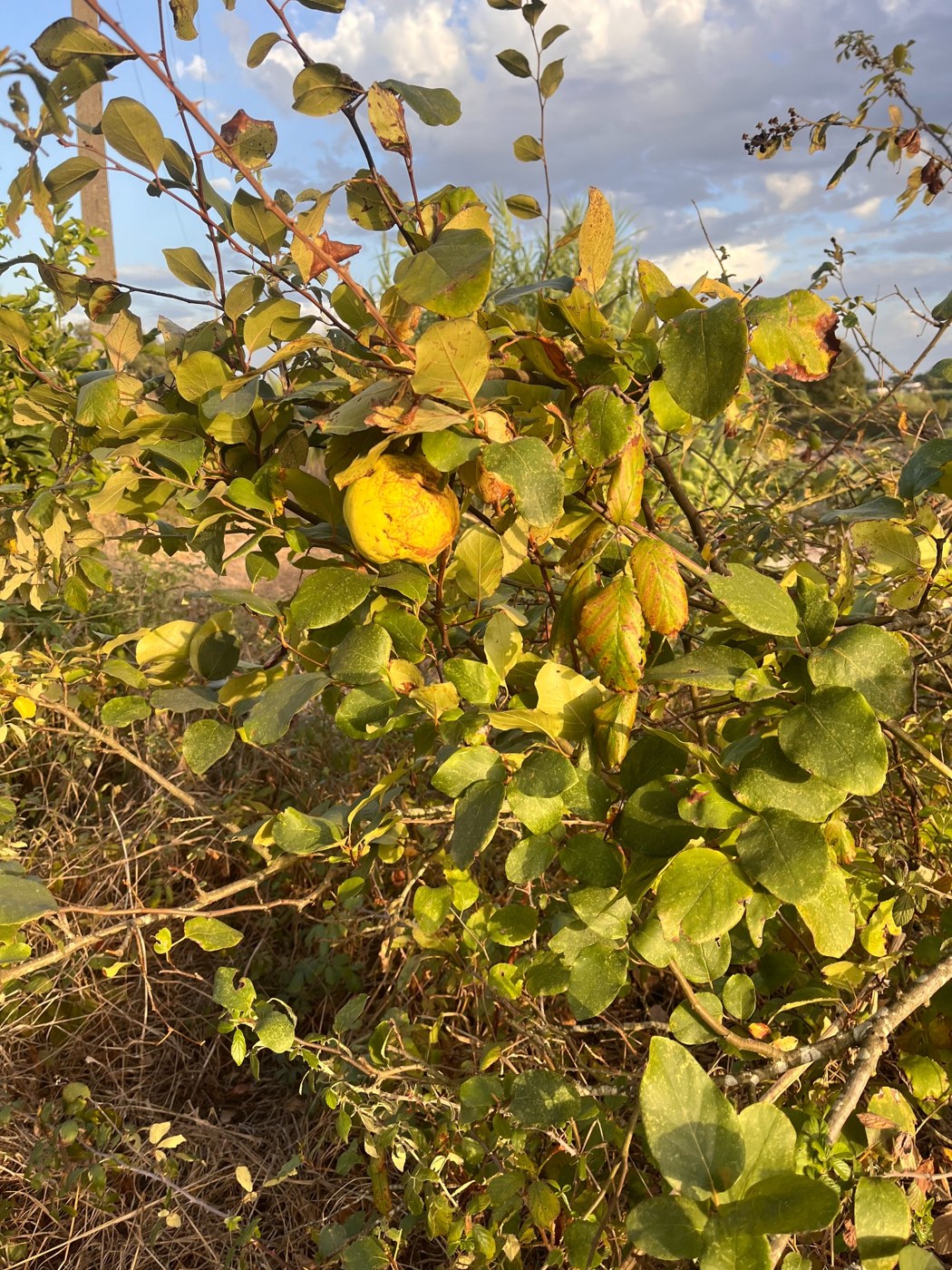
The larger fruit on the older trees belongs to a slightly different story. Quince and persimmon can be part of the autumn harvest without being wild. An old planted tree is still a planted tree, and an apparently abandoned one may still belong to somebody. Knowing what grows along a boundary includes knowing whose boundary it is. Ask before picking, avoid sprayed or polluted edges, and leave fruit for birds and other wildlife. There is no need to tidy a hedge into an empty hedge.
Back at the kitchen, small amounts are easiest to deal with promptly. Sort and wash the berries, dry them, then freeze them spread on a tray before packing into labelled freezer containers. That keeps them loose enough to take out a handful. Sound, correctly identified fruit can become a cooked compote or a batch of jam, but shelf-stable jars need a tested recipe for that fruit and the right process. Adding sugar and tightening a lid is not a preservation system. Prickly-pear pulp or juice can go into the freezer once properly cleaned and prepared. The earlier preserving note covers the wider question of what to do with a surplus.
This is another reason to keep walking the land. Note where useful plants are, when they ripen, and which patches stay worth checking after the heat. I am still putting that picture together. The fields have a list of jobs already. Apparently the hedges have their own.
Further reading
RHS: hedgerow fruit and safe picking · University of Évora: medronheiro · University of Arizona: handling prickly-pear fruit.
← Back to The Farm